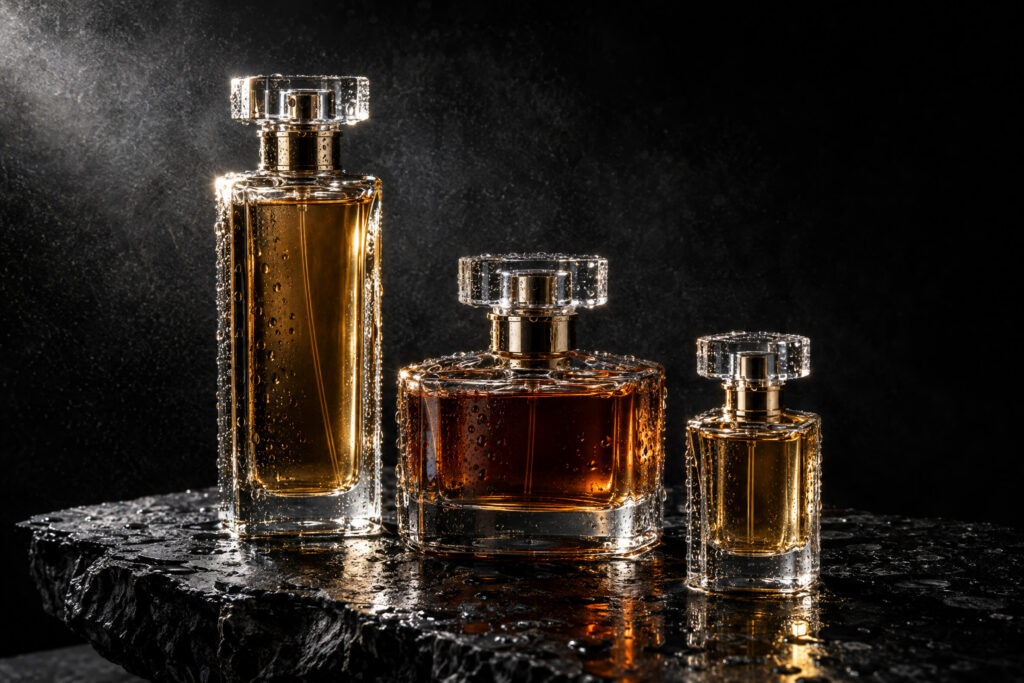
A signature scent is the fragrance you wear often enough that people associate it with you. To choose one, work out which fragrance family you are drawn to, test two or three options on your skin rather than on paper, and wear each for a full day before deciding. Then apply it lightly to pulse points and let it dry without rubbing.
In short
- Start with fragrance families (fresh, woody, aromatic, amber, fruity, gourmand) rather than brand names. Most people gravitate to one or two.
- A fragrance changes as it dries. The first spray is not what you will smell like an hour later.
- Test on skin, wait for the dry-down, and wear it for a day before buying.
- Two or three sprays on pulse points is plenty. Do not rub your wrists together.
- Store bottles somewhere cool and dark, not on a sunny windowsill or in a steamy bathroom.
What is a signature scent?
A signature scent is one fragrance you wear consistently, so that it becomes part of how people remember you. It does not have to be expensive or rare. It has to suit you, suit your skin and suit the way you live.
That last point matters. A dense, sweet evening fragrance can feel heavy on a commute in July. Many men end up with one main scent and a second for evenings, which is less a betrayal of the idea than a sensible refinement of it. More on that below.
Fragrance notes explained: top, heart and base
Every fragrance is built in layers that evaporate at different speeds. Understanding them is the single most useful thing you can learn before buying.
- Top notes are what you smell first. Floris describes them as bright and fleeting, lasting from a few minutes to an hour. Citrus such as bergamot is a classic top note.
- Heart notes (or middle notes) emerge as the top fades. They are the main character of the fragrance and linger for several hours. Florals such as jasmine and ylang often sit here.
- Base notes are the heavier ingredients that evaporate slowly: woods, musk, vanilla, amber, oakmoss. They are what remains on your skin late in the day.
The practical lesson: never judge a fragrance on the first ten seconds. The top notes that grab you in a shop are the first to leave.
How to choose a fragrance: the main families
Perfumers group fragrances into families based on their dominant character. You do not need to memorise them, but knowing which ones you like makes shopping far quicker.
| Family | What it smells like | Typical notes | Good for |
|---|---|---|---|
| Fresh / citrus | Clean, bright, sharp | Bergamot, lemon, grapefruit, neroli | Daytime, warm weather, the office |
| Woody | Dry, warm, grounded | Cedarwood, sandalwood, vetiver | Year-round, understated wear |
| Aromatic / fougère | Herbal, barbershop-clean | Lavender, oakmoss, coumarin | Classic, versatile everyday wear |
| Oriental / amber | Rich, warm, resinous | Amber, vanilla, resins, spice | Evenings, colder months |
| Fruity | Juicy, lively, approachable | Blackcurrant, apple, pear | Daytime, easy first fragrances |
| Gourmand | Sweet, edible, comforting | Vanilla, tonka, caramel, coffee | Evenings, close-to-skin wear |
The fougère family has a story worth knowing. It traces back to Fougère Royale, created by Paul Parquet for Houbigant in 1882, built on lavender, oakmoss and coumarin, a compound with a scent like new-mown hay. That accord is still the backbone of much of what we think of as a classic men’s fragrance.
Most fragrances blend families. A scent might open fruity and dry down into something woody or warm. That is where the notes pyramid helps: read the top notes for the first impression and the base notes for how it will wear.
How to test a fragrance properly
Testing is where most people go wrong. They spray three things on paper strips, sniff them in quick succession and buy the loudest one. Here is a better process.
- Shortlist by family. Pick two or three fragrances from families you already like. More than three and your nose stops telling them apart.
- Use a blotter to rule things out, not in. A paper strip is fine for a quick first impression and for eliminating anything you dislike outright.
- Move to skin for the real test. Fragrances are made to be worn, and Floris advises that the best way to test is always on the skin. Your skin’s warmth and oils change how a scent develops.
- One fragrance per wrist, maximum. Two is the limit if you want to compare. Label which is which.
- Wait for the dry-down. Leave it at least an hour before deciding. The heart and base notes are what you will be living with.
- Wear it for a day. Notice how it smells mid-afternoon, whether it fades too fast or feels too heavy, and whether anyone mentions it.
- Sleep on it. If you still want it the next day, that is a good sign.
Where to spray cologne and how to apply it
Fragrance projects best from warm areas of skin. Bon Parfumeur describes pulse points as areas where the skin is thin and releases heat: the neck, wrists, behind the ears, the nape of the neck.
Where to spray
- Neck or base of the throat. The classic spot; your body heat lifts the scent gently.
- Inner wrists. Easy, and you can smell it yourself through the day.
- Chest. Under a shirt, the fabric softens projection, which suits stronger fragrances or the office.
How much to use
As a general guide, two or three sprays is enough for most colognes and eaux de parfum. If people can smell you from across the room, you have overdone it. If you cannot smell it at all after an hour, you may have become used to it, which is normal; ask someone you trust before adding more.
Don’t rub
Spray, then let it dry. Perfumer Francis Kurkdjian calls rubbing your wrists together a bad habit, explaining that it heats the skin and changes the course of the scent. You rush past the top notes you chose it for.
How long does cologne last?
It depends on three things: the concentration, the notes and your skin.
- Concentration. An eau de parfum contains more perfume oil than a cologne, so it generally lasts longer and projects more. Our guide to cologne vs eau de parfum covers the difference in detail.
- Notes. Fresh, citrus-led fragrances fade faster because those top notes are the most volatile. Fragrances with woody, amber or vanilla bases hold on longer.
- Skin. Everyone’s skin is different, so the same fragrance can wear differently on two people. Applying to clean skin after a shower is a good habit.
If you want more presence late in the day, reapply lightly rather than starting with more sprays.
Storing fragrance so it stays true
Light, heat and humidity all degrade fragrance over time. Bon Parfumeur recommends keeping bottles in a drawer, away from moisture, light and heat, and suggests avoiding the bathroom in favour of a room with a steadier temperature.
In practice: keep the box, keep the cap on, and keep it out of the sun. A bedroom drawer or wardrobe shelf is ideal.
Century or Willow? Choosing between our colognes
Our two signature scents run across the Hollo Supply range, from beard care to cologne. They are very different characters.
Century: fruity and warm
Century Cologne opens with blackcurrant, apple and bergamot. The heart is jasmine and oakmoss, and it settles onto a vanilla base. The result is fruity at first, then warm and rounded as it dries. Choose Century if you like approachable fragrances with a touch of sweetness, or if fruity and amber scents are where your nose naturally goes.
Willow: earthy and refined
Willow Cologne pairs black truffle and ylang with a fresh lift of bergamot and blackcurrant. It is earthier and more unusual than Century: refined rather than sweet. Choose Willow if you lean towards woody or earthy fragrances and want something that does not smell like everyone else on the train.
If you are torn, think about your wardrobe and your day. Century reads warmer and more relaxed; Willow reads more tailored.
And for evenings
Our eaux de parfum are built for different moments. Crusade Eau de Parfum is our signature: bold and made for evenings. Vanille Eau de Parfum has a subtle sweetness, for special days and nights.
Do you need more than one signature scent?
Not necessarily, but many men find a small scent wardrobe more practical than a single bottle. A simple approach:
- Day: something lighter you can wear to work without thinking, such as a fresh or fruity cologne.
- Evening: something deeper or bolder, such as an eau de parfum with a warmer base.
Your signature then becomes the day scent, the one people know you by, with an evening alternative for dinners and occasions. Two bottles, chosen well, cover almost everything. If you are buying for someone else, our grooming gifts for men guide has more ideas.
Frequently asked questions
How do I find my signature scent?
Identify the fragrance families you like, shortlist two or three scents, and test them on your skin. Wait at least an hour for the dry-down and wear your favourite for a full day before buying. The one you still want the next morning is usually the right choice.
Where should men spray cologne?
On warm pulse points: the neck, the base of the throat, the inner wrists, or the chest under a shirt. Two or three sprays is enough for most fragrances. Let it dry naturally rather than rubbing it in.
Should you spray cologne on clothes or skin?
Skin is where fragrance is designed to develop, because your body warmth lifts the notes over time. Spraying fabric can make a scent last, but some fragrances can mark delicate materials, so test on an inconspicuous area first if you do.
Why can’t I smell my own cologne after a while?
Your nose adapts to a smell it encounters constantly, so you notice your own fragrance less as the day goes on. Others can usually still smell it. Resist the urge to keep adding sprays; ask someone close to you instead.
What is the difference between top, heart and base notes?
Top notes are the lightest ingredients and the first you smell, fading within roughly an hour. Heart notes form the main character and last several hours. Base notes are the heaviest and linger longest, giving a fragrance its depth.
Ready to find yours? Explore our full fragrance collection.