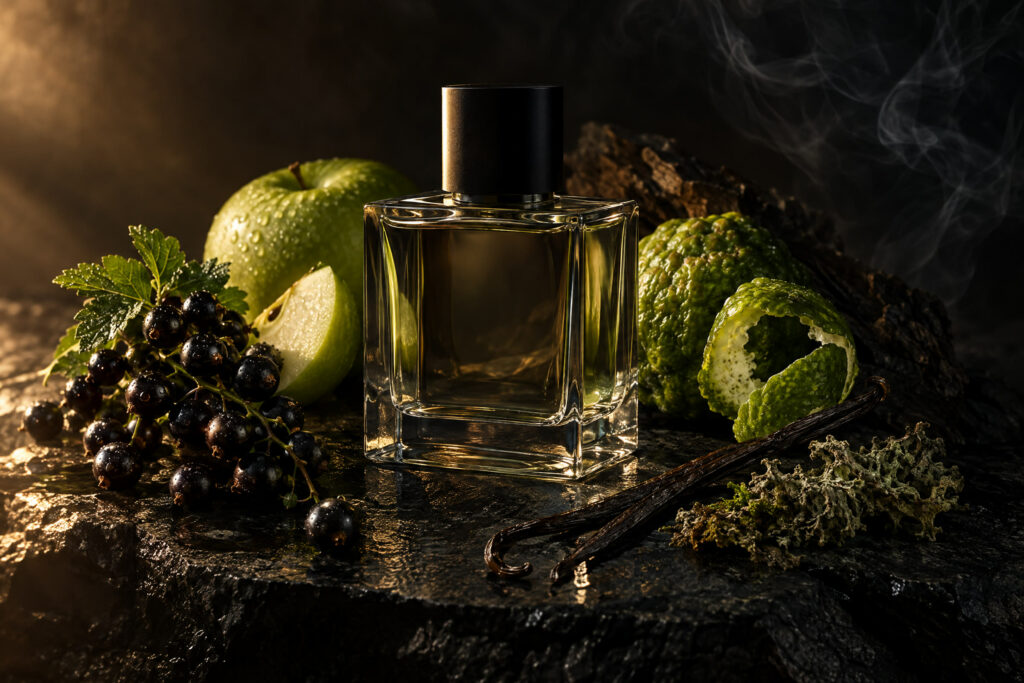
To apply cologne, spray it onto clean, moisturised skin at warm pulse points, such as the side of the neck, the base of the throat, the inner wrists or the chest, holding the bottle a short distance from your skin. Two or three sprays is enough for most fragrances. Let it dry on its own. Do not rub your wrists together, and do not spray more because you can no longer smell it.
In short
- Spray onto skin, not just clothes, and onto warm areas where the scent can rise gently through the day.
- Two or three sprays suits most fragrances. Stronger concentrations need fewer.
- Moisturised skin tends to hold fragrance better than dry skin, so apply after your shower and moisturiser.
- Never rub it in. Let it dry naturally.
- Store bottles somewhere cool and dark. Heat and sunlight are what spoil a scent.
Where should you spray cologne?
Fragrance develops on warm skin. The areas known as pulse points, where blood vessels run close to the surface, are slightly warmer than the rest of you, so the scent lifts off them gently over the day. That is why they are the classic places to apply it.
The main spots
- Side of the neck. The most common choice. It sits close enough to be noticed when someone leans in, without filling a room.
- Base of the throat. Good under an open collar. Your body heat carries the scent upwards.
- Chest. Under a shirt, the fabric softens how far the scent travels. A sensible choice for the office or for stronger fragrances.
- Inner wrists. Easy to reach, and you can catch the scent yourself through the day.
- Behind the ears. Close and discreet. Better for lighter scents or evenings out.
You do not need all of them. Pick two, perhaps three, and stick to them.
Where not to spray it
- Directly onto freshly shaved skin. Alcohol on a just-shaved neck can sting. Spray your chest instead, or wait until the skin has settled.
- Into your hair from close range. The alcohol can dry hair out. If you want a hint of scent there, spray into the air and walk through it.
- Under the arms. Sweat and deodorant change how a fragrance smells.
- Onto irritated or broken skin. Leave it alone until it has healed.
How to apply cologne, step by step
- Shower first. Clean skin gives the fragrance a neutral base. Old sweat and leftover scent from yesterday will muddy it.
- Dry off and moisturise. Pat yourself dry, then apply an unscented or matching moisturiser to the areas you will spray. More on why below.
- Hold the bottle a short distance from your skin. Close enough to land where you aim, far enough for the spray to spread rather than pooling in one spot.
- Spray your chosen points. One spray per spot, two or three in total for most fragrances.
- Let it dry naturally. Give it a minute before you put on a shirt.
- Leave it alone. Do not rub, dab or spray more because the first burst has faded.
- Get dressed last. Applying fragrance before clothes keeps it on your skin, where it is meant to develop.
How many sprays of cologne should you use?
It depends on the concentration of the fragrance and where you are going. The labels on the bottle describe how much perfume oil is dissolved in the formula, from lighter colognes up to richer eaux de parfum. Our guide to cologne vs eau de toilette vs eau de parfum explains what each term means.
As general guidance, not a rule:
| Type | Character | Sprays for daytime | Sprays for evening |
|---|---|---|---|
| Eau de cologne | Light, fresh, quick to fade | 3–4 | 4 |
| Eau de toilette | Brighter and lighter than a parfum | 2–3 | 3–4 |
| Eau de parfum | Richer, deeper, usually longer-wearing | 1–2 | 2–3 |
| Parfum or extrait | Dense and intimate | 1 | 1–2 |
A few things move these numbers:
- The fragrance itself. Fresh, citrus-led scents fade faster. Woody, resinous and vanilla bases linger.
- The setting. Offices, trains and restaurants call for a lighter hand than an evening outdoors.
- The weather. Heat makes fragrance project further, so use less in summer.
- Your skin. Dry skin tends to let fragrance fade faster.
Bear in mind that “cologne” is also everyday shorthand for any men’s fragrance, so a bottle sold as cologne is not necessarily the lightest strength. If in doubt, start with two sprays and ask someone you trust whether it is too much.
If people can smell you from across the room, you have overdone it. The aim is for someone close to you to notice it, not the whole lift.
Why you should not rub cologne into your wrists
Rubbing your wrists together after spraying is one of the most common habits, and one of the least helpful. The friction warms the skin and spreads the fragrance thinly, which rushes it through its opening notes. You lose the part of the scent you probably chose it for.
Spray, then leave it. If you want it on both wrists, spray each one separately, or touch them together lightly once and let go.
How to make cologne last longer
No fragrance lasts forever on skin, and how long it lasts depends on the formula, your skin and the conditions. But a few habits make a real difference.
Apply to moisturised skin
Fragrance tends to fade faster on dry skin. A light moisturiser underneath gives it something to cling to. An unscented one keeps the scent clean; our Hydrating Facial Cream, a lightweight daily moisturiser, works well on the neck and throat before you spray.
Layer with matching products
Wearing the same scent across more than one product builds a quieter, more lasting presence than one heavy dose of cologne. Our two signature scents run across the range for exactly this reason:
- Century opens with blackcurrant, apple and bergamot, with jasmine and oakmoss at the heart and a vanilla base. Fruity, warm and rounded. Pair Century Cologne with Beard Oil, Beard Wax or Post Shave Balm in the same scent.
- Willow blends black truffle, ylang, bergamot and blackcurrant. Earthy and refined, with a fresh top. Willow Cologne layers with the Willow versions of the same beard and shave products.
A few drops of Beard Oil in the matching scent, followed by a couple of sprays of cologne on the neck or chest, is the simplest way to do it.
Spray clothes with care
Fabric holds scent longer than skin, which is why a jacket can smell of your fragrance days later. A light mist on a scarf or the inside of a jacket can extend it. Be careful with delicate or light-coloured fabrics, which some fragrances can mark, and test somewhere hidden first.
Do not reapply because you cannot smell it
Your nose adapts to smells it meets constantly, so you stop noticing your own fragrance long before other people do. Reapplying heavily at lunchtime because it “has worn off” is how people end up overpowering a room. If you want more presence later in the day, one light spray is plenty.
Where to store cologne
Fragrance is sensitive to heat, light and air. Stored badly, the top notes can turn flat or sharp.
- Keep it cool and dark. A drawer or cupboard is ideal.
- Not on a sunny windowsill. Sunlight breaks fragrance down.
- Not in a steamy bathroom. Heat and humidity swing every day in there.
- Keep the cap on. Less exposure to air helps keep it as it was when you bought it.
- Keep it in the box if you have the space. It is the simplest way to keep light off it.
Can cologne irritate your skin?
For most people, no. But fragrance is a common cause of skin reactions. The American Academy of Dermatology lists fragrance as one of the most common causes of contact dermatitis, which can range from an itchy rash to hives.
If you have sensitive skin:
- Spray onto your chest over a thin layer of moisturiser, or onto clothing, rather than straight onto your neck.
- Avoid spraying just-shaved skin.
- Try a new fragrance on a small area first and wait a day.
- If a rash or itch develops where you applied it, stop using it.
The NHS advises speaking to a pharmacist if contact dermatitis is troubling you, and seeing a GP if symptoms are persistent, recurrent or severe.
Choosing what to wear, and when
Applying cologne well matters more than owning several. But if you are building a small wardrobe, it helps to have a lighter scent for daytime and something deeper for evenings. Our two eaux de parfum, Crusade and Vanille, are made for evenings and special occasions, while Century and Willow work from morning onwards.
If you are still deciding on yours, our guide on how to choose a signature scent walks through fragrance families and how to test on skin.
Frequently asked questions
Where is the best place to spray cologne?
On warm pulse points: the side of the neck, the base of the throat, the chest or the inner wrists. Pick two or three rather than all of them. The warmth of your skin lifts the scent gently through the day.
How many sprays of cologne is too many?
For most fragrances, more than three or four sprays starts to become too much, and with a rich eau de parfum one or two may be plenty. If people notice it from across a room, or it lingers in a lift after you have left, cut back.
Should you spray cologne on skin or clothes?
Skin first. Fragrance is designed to develop with the warmth of your skin. Clothes hold scent longer, so a light mist on fabric can help it last, but test somewhere hidden first, as some fragrances can mark delicate materials.
How do you make cologne last longer?
Apply it to moisturised skin straight after a shower, spray rather than rub, and layer with products in the same scent, such as a matching beard oil. Store the bottle somewhere cool and dark. Avoid reapplying heavily just because you can no longer smell it yourself.
Should you apply cologne before or after getting dressed?
Before. Spray onto skin, let it dry for a minute, then get dressed. Applying it first keeps the fragrance on your skin, where it is meant to develop, and avoids marking your clothes.
Find Century, Willow and our eaux de parfum in the fragrance collection.