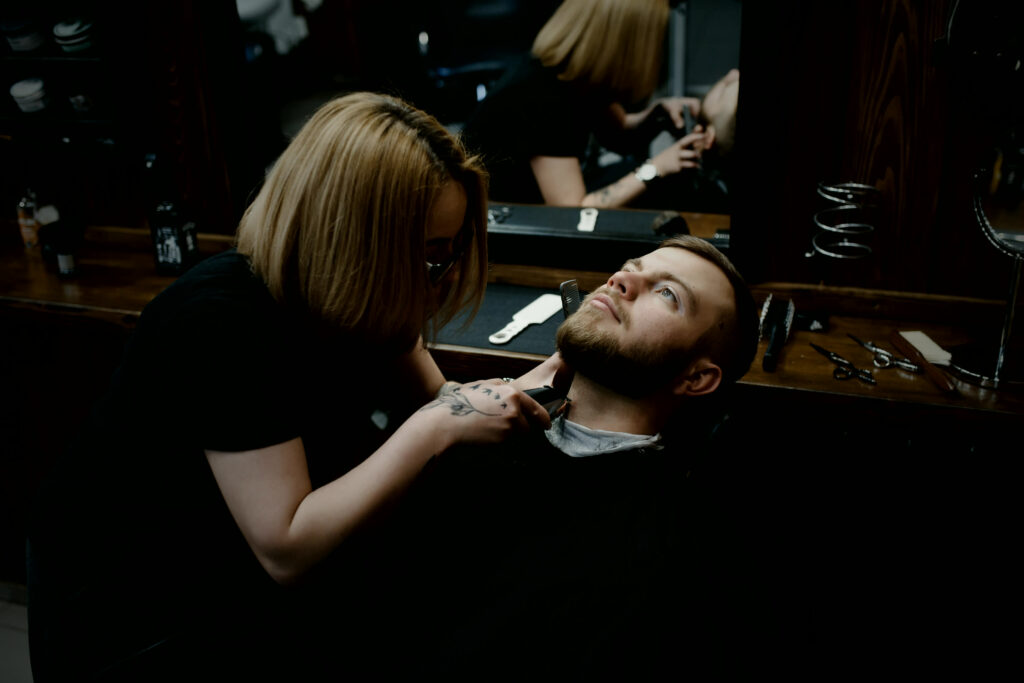
To stop beard itch, look after the skin under the beard rather than the hair on top. Most itch comes from dry skin, short new hairs pushing through, or washing with soap and very hot water. Wash with a gentle beard wash, rinse in lukewarm water, moisturise the skin while it is still damp, and comb daily. If the itch persists or comes with redness or a rash, see a pharmacist.
In short
- Beard itch is usually a skin problem, not a hair problem. Dryness under the beard is the most common cause.
- New growth itches because short, freshly cut hairs have blunt, sharp ends. It tends to ease as the beard grows longer.
- Swap soap and shower gel for a beard wash, keep the water lukewarm and moisturise straight afterwards.
- White flakes in a beard are often just dry skin, but greasy yellowish scales and redness are worth showing a pharmacist.
- Grooming products help moisturise and soften. They are not a treatment for a skin condition.
Why does my beard itch?
A beard is a good hiding place for dry skin. It covers the skin from view, soaks up the natural oil your skin produces and traps dead skin cells close to the surface. Add the things most of us do every day, such as hot showers, foaming soap, central heating and cold wind, and the skin under the beard ends up tight and itchy.
The American Academy of Dermatology makes the point directly: without moisturiser, the skin beneath your beard can become dry, flaky and itchy. It also notes that well-hydrated skin and hair feel softer and itch less.
The usual causes, roughly in order of how often they come up:
- Dry skin. The most common reason by some distance, and the easiest to change.
- New growth. Short hairs with blunt, freshly cut tips poke at the skin as they grow out.
- The wrong wash. Soap and many shower gels strip oil from both skin and hair.
- Not washing enough. Food, sweat and dead skin build up in a beard faster than you might think.
- Product build-up. Too much oil or balm, never washed out, can leave the skin feeling clogged.
- A reaction to something new. Fragrance or another ingredient in a new product can irritate sensitive skin.
- A skin condition. Less common, and a job for a pharmacist or GP rather than a grooming routine. More on that below.
Why does a new beard itch so much?
Most men who give up on a beard do it in the first few weeks, and itch is usually the reason. When you shave, the razor cuts each hair at an angle, leaving a blunt end. As those hairs grow back, the short tips press against the skin and the hair follicle. The skin under fresh stubble is also often still recovering from years of daily shaving.
The good news is that this kind of itch tends to settle as the hairs grow longer and softer, and the ends stop pointing straight at the skin. You can make the in-between stage much more comfortable:
- Moisturise from day one. A few drops of beard oil on stubble go almost entirely onto the skin, which is exactly where you want them.
- Resist the urge to scratch. Scratching irritates the skin further. Pat or press instead.
- Do not reach for the razor too soon. Shaving it off restarts the cycle.
- Keep it tidy, not short. A light tidy-up of the neckline and cheeks is fine. Cutting the whole beard back to stubble every few days means living permanently in the itchiest stage. Our guide on how to trim a beard at home covers how to tidy without starting again.
How to stop beard itch: a daily routine
You do not need a cabinet full of products. You need the right order and a light hand.
- Wash with a beard wash, not soap. The AAD recommends washing your face and beard with a gentle cleanser rather than soap. Our Beard Shampoo is made with argan oil and other natural oils and is designed to clean without stripping.
- Use lukewarm water. Hot water feels good but dries skin out. The NHS advice for itchy skin includes cool or lukewarm showers, and not spending a long time in them.
- Rinse thoroughly. Leftover wash sitting in the beard can irritate the skin underneath.
- Pat dry. Press a towel into the beard rather than scrubbing back and forth.
- Moisturise while the beard is still slightly damp. Work beard oil into the skin first with your fingertips, against the direction of growth, then smooth it down through the hair.
- Comb it through. A wide-tooth comb spreads the oil, lifts loose skin and stops tangles from pulling.
- Repeat the moisturising step in the evening if your skin runs dry. Central heating and winter weather often call for a second, lighter application.
That is the whole routine. Most people who follow it for a while notice the difference in how the skin feels. If you want the detail on drops and timing, our guide on how to use beard oil goes step by step.
What helps an itchy beard: oil, balm or conditioner?
All three help moisturise. They differ in texture, how easily they reach the skin, and how much softening they add to the hair.
| Product | What it is | Best for | How it helps with itch |
|---|---|---|---|
| Beard oil | A blend of carrier oils, applied in drops | Stubble to medium beards, daily use | Reaches the skin easily, so it moisturises where itch starts |
| Beard moisturiser (leave-in conditioner) | A cream that stays in after washing | Coarse, curly or longer beards | Softens bristles and soothes the skin at the base of the beard |
| Beard wax or balm | A soft, butter-and-wax styler | Fuller beards that need shaping | Adds some conditioning, but mainly there for hold |
| Beard wash | A cleanser made for facial hair | Everyone, most days | Cleans without stripping, so the skin is less likely to dry out |
Our Beard Oil pairs hemp oil, which moisturises the skin under the beard, with jojoba oil, which softens the hair. If your beard is coarse or long and oil alone does not feel like enough, add a leave-in such as our Beard Moisturiser. Plenty of men use oil in the morning and the moisturiser at night.
Does beard oil stop itching?
Beard oil helps moisturise the skin under the beard, and because dry skin is the most common reason a beard itches, many people find it makes a noticeable difference to comfort. It is not a medicine, though. It will not deal with an infection, an allergy or a skin condition, and if your itch does not settle with good washing and moisturising habits, the answer is advice from a pharmacist, not more oil.
Two tips that make oil work better for itch:
- Get it to the skin. Smoothing oil over the surface of a beard conditions the hair but barely touches the skin. Use your fingertips and work upwards.
- Do not overdo it. Too much oil sitting on the skin can leave it feeling greasy and clogged. Start with a few drops and add one at a time.
Beard dandruff: what are those white flakes?
“Beard dandruff” is the everyday name for flakes of skin that collect in facial hair. In many cases it is simply dry skin, made worse by the same things that cause itch: harsh washing, hot water and cold weather. A gentler wash, regular moisturising and a daily comb often reduce how much you see.
It is worth knowing what the dermatologists say, though. The British Association of Dermatologists explains that dandruff is a mild form of seborrhoeic dermatitis, a common condition that makes the skin red, itchy and flaky, often around the eyebrows and the creases of the nose, and sometimes with yellowish scales. That is a condition rather than a grooming issue, and it is usually managed with antifungal creams and shampoos.
The NHS page on dandruff says a pharmacist can advise on medicated shampoos, and suggests seeing a GP if things have not improved after using one, or are getting worse.
So, to be clear about what grooming products do and do not do:
- Our beard products, and our Tea Tree Shampoo for the hair on your head, are everyday cosmetic products. They clean and help moisturise. They are not medicated or anti-dandruff treatments.
- If your flakes are greasy, yellowish or come with redness, or if they keep coming back despite a good routine, speak to a pharmacist.
When should you see a pharmacist or GP about beard itch?
Most beard itch is dry skin and responds to the basics. Some is not. Speak to a pharmacist, who can advise and tell you whether you need a GP, if your itch:
- does not get better with a sensible routine, or keeps coming back
- is affecting your sleep or daily life
- comes with redness, a rash, bumps, swelling or pus
- comes with greasy, yellowish scales or heavy flaking
- appeared after you started using a new product
- comes with patches where the beard hair is falling out
The NHS advises seeing a GP if itchy skin does not get better with self-care, keeps coming back or is affecting your daily life, or if it comes with a new rash that worries you.
If you suspect a reaction to a product, stop using it. Before you put anything new on your face, patch test a small amount on the inside of your forearm and wait a day, particularly if your skin is sensitive to fragrance.
Frequently asked questions
How long does beard itch last?
It depends on the cause. The itch of new growth tends to ease as the hairs grow longer and softer, though it varies from person to person. Itch caused by dry skin usually improves once you change how you wash and start moisturising. If it does not settle, or keeps returning, speak to a pharmacist.
Should I shave my beard off if it itches?
Usually not. Shaving resets the beard to its itchiest stage, and the itch will likely return as it grows back. Try a gentle wash, lukewarm water and daily moisturising first. If the skin is red, sore or spotty, though, get advice from a pharmacist before carrying on.
Is beard dandruff the same as dandruff on your scalp?
It can be. Often the flakes in a beard are simply dry skin, but dandruff on the scalp is a mild form of seborrhoeic dermatitis, which can also affect the face. If your flakes are greasy, yellowish or come with redness, a pharmacist can advise on suitable medicated products.
Can beard oil make itching worse?
It can if you use far too much, or if your skin reacts to an ingredient or fragrance in it. Start with a few drops, work them into the skin and patch test any new product on your forearm first. If your skin becomes red or more irritated, stop using it.
How often should I wash my beard?
Most days, with a gentle beard wash rather than soap, is a good rule for most people. The AAD recommends washing your face and beard every day with a gentle cleanser. If your skin feels tight after washing, use lukewarm water and moisturise straight away.
A comfortable beard starts with the skin underneath, and everything for washing, moisturising and styling is in our beard care range.